Does Post Menopausal Bleeding Always Mean Cancer - Does Microscopic Colitis Always Cause Fatigue? » Scary ... : Vaginal infections such as yeast or bacterial vaginosis are another culprit.. Early diagnosis offers the best chance to beat endometrial cancer. For 10 percent of women, however, the cause is endometrial cancer. Although the exact cause of endometrial cancer is unknown, increased levels of estrogen appear to play a role. 2 but cancer is a worrying and serious condition which needs to be ruled out as early diagnosis and treatment is vital, so with any postmenopausal bleeding, it is important to seek medical advice from your gp or gynaecologist. If there is no vaginal bleeding, then thicker cut offs have been proposed where the risk for cancer increases.
2 but cancer is a worrying and serious condition which needs to be ruled out as early diagnosis and treatment is vital, so with any postmenopausal bleeding, it is important to seek medical advice from your gp or gynaecologist. Spotting or light bleeding after menopause might not seem like a serious problem, but you should never ignore it or wait to bring it up with your doctor. I would also suggest that you see a different doctor than the one that you are. Here's what every postmenopausal woman should know. Nonetheless, this measure may be insufficient.
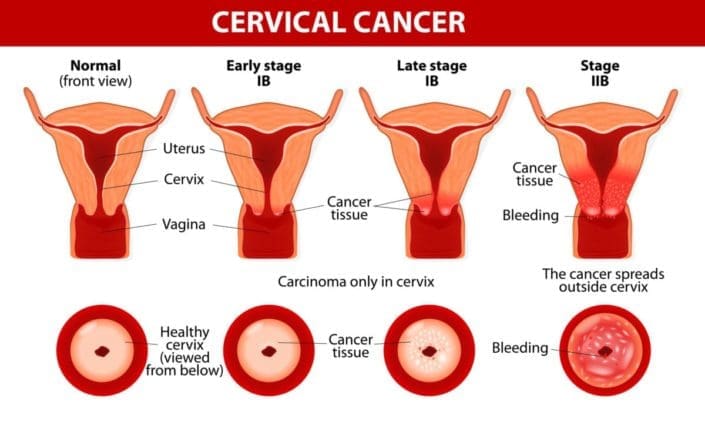
Cervical Cancer - familydoctor.org from familydoctor.org Endometrial cancer is staged as follows: A thickened endometrium in a post menopausal patient can be due to a variety of causes. That information doesn't really differ from what doctors have historically thought about the incidence of endometrial cancer and bleeding, says berkowitz. Estrogen can be taken in different ways, including: A thickness under 5 mm does not exclude cancer however. I'm sure they could give you some direction. That information doesn't really differ from what doctors have historically thought about the incidence of endometrial cancer and bleeding, says dr. Often, vaginal bleeding can be caused by your levels of estrogen.
Here's what every postmenopausal woman should know.
Although bleeding may have been caused by some form of physical activity, vaginal discharge, yeast infection or vaginal itching, there may be a chance that it actually was a symptom of something more serious, such as hyperplasia, which is an increase in abnormal cells, or cancer. After a woman's periods have stopped, vaginal bleeding could be a sign of a health issue—including endometrial (uterine) cancer. The widespread practice of referring all women with postmenopausal bleeding for transvaginal ultrasound and/or endometrial biopsy carries a considerable burden and cost, the researchers wrote. You will most likely be referred to a gynaecologist who may: For 10 percent of women, however, the cause is endometrial cancer. A second opinion never hurts and could help you quite a bit. Early diagnosis offers the best chance to beat endometrial cancer. Approximately 20 percent of older women with menopausal bleeding have uterine cancer. However, abnormal vaginal bleeding is also one of the most frequent symptoms experienced by women when they have gynecologic cancer, such as cervical cancer, endometrial cancer, uterine cancer, or ovarian cancer. All women with postmenopausal bleeding should be referred urgently. At times, the tumor may get into the lymph nodes. I'm sure they could give you some direction. This is thickening of the uterine lining and it is not always a sign of cancer, even though, as dr.
Polyps are generally not cancerous, while women with endometrial hyperplasia are at higher risk of developing endometrial cancer. Approximately 20 percent of older women with menopausal bleeding have uterine cancer. Most cases can be successfully handled via a hysterectomy. Around 10% of women with postmenopausal bleeding have endometrial cancer. You may experience irregular bleeding leading up to menopause, a stage known as perimenopause.
Cancer symptoms: Signs of prostate tumour include blood in ... from cdn.images.express.co.uk It could be cancer, but in most cases it is not. If the answer to the question of is bleeding after menopause always cancer is positive, he or she will appoint your treatment. A second opinion never hurts and could help you quite a bit. It occurs in up to 10% of women aged over 55 years. When bleeding does stop, it's natural not to think about it again. Although bleeding may have been caused by some form of physical activity, vaginal discharge, yeast infection or vaginal itching, there may be a chance that it actually was a symptom of something more serious, such as hyperplasia, which is an increase in abnormal cells, or cancer. This is thickening of the uterine lining and it is not always a sign of cancer, even though, as dr. Here's what every postmenopausal woman should know.
There are many causes of postmenopausal bleeding and normally it is benign (not due to cancer).
Approximately 20 percent of older women with menopausal bleeding have uterine cancer. After a woman's periods have stopped, vaginal bleeding could be a sign of a health issue—including endometrial (uterine) cancer. The good news according to an analysis published in jama internal medicine, is that most likely your bleeding is caused by a noncancerous condition, such as vaginal atrophy, uterine fibroids, or polyps. Most of the time, a benign process causes bleeding or spotting, and hormonal fluctuations are often the culprit. There are benign causes of postmenopausal bleeding. Uterine cancer usually occurs after menopause, typically between the ages of 60 and 70. That information doesn't really differ from what doctors have historically thought about the incidence of endometrial cancer and bleeding, says berkowitz. Went for an ultrasound and also had a hysteroscopy at the same appointment. Schink points out, it can eventually lead to malignancy. Postmenopausal bleeding and need for d&c. Abnormal vaginal bleeding is the most common symptom of uterine cancer. 2 but cancer is a worrying and serious condition which needs to be ruled out as early diagnosis and treatment is vital, so with any postmenopausal bleeding, it is important to seek medical advice from your gp or gynaecologist. 21 may 2019 21:29 in response to luc50.
Vaginal infections such as yeast or bacterial vaginosis are another culprit. Around 10% of women with postmenopausal bleeding have endometrial cancer. Approximately 20 percent of older women with menopausal bleeding have uterine cancer. Hello luc50, i'm in a similar boat. Although bleeding may have been caused by some form of physical activity, vaginal discharge, yeast infection or vaginal itching, there may be a chance that it actually was a symptom of something more serious, such as hyperplasia, which is an increase in abnormal cells, or cancer.
Gynaecology | Brisbane Obstetrician & Gynaecologist - Dr ... from www.drkenlaw.com.au Hadn't had a period for 18 months, then had bleeding. Abnormal vaginal bleeding is the most common symptom of uterine cancer. Typically, postmenopausal women who experience bleeding are referred for further testing to either rule out or diagnose endometrial cancer. Early diagnosis offers the best chance to beat endometrial cancer. It also may occur around the time that menopause begins. Schink points out, it can eventually lead to malignancy. Risk for cancer in women with postmenopausal bleeding was lowest in north america (5%) and highest in western europe (13%). What are some symptoms of uterine cancer?
I would also suggest that you see a different doctor than the one that you are.
Once you have figured out the cause of the bleeding, here are some ways your doctor may treat it. Went for an ultrasound and also had a hysteroscopy at the same appointment. 1 in almost all of these cancer cases, bleeding is the first sign. We were out of town, at a friend's house in northampton, ma, and were a bit freaked out. Abnormal vaginal bleeding is the most common symptom of uterine cancer. Estrogen helps stimulate the buildup of the lining of the uterus. A second opinion never hurts and could help you quite a bit. Most cases can be successfully handled via a hysterectomy. If the answer to the question of is bleeding after menopause always cancer is positive, he or she will appoint your treatment. A bloody vaginal discharge is commonly due to dryness and thinning of vaginal tissue from lack of estrogen. He passed away in 2015. But it is not the normal symptom to get bleeding after menopause. I'm sure they could give you some direction.